ACS table-of-contents graphic
Choose one transformation, material or property as the focal point. Give it enough space to read at the journal's display size and check the instructions for your specific journal.
Explore chemistry graphical abstract layouts, ACS table-of-contents graphic ideas and reaction workflow diagrams. Choose a layout that fits the chemical result you want to communicate.
Use this example brief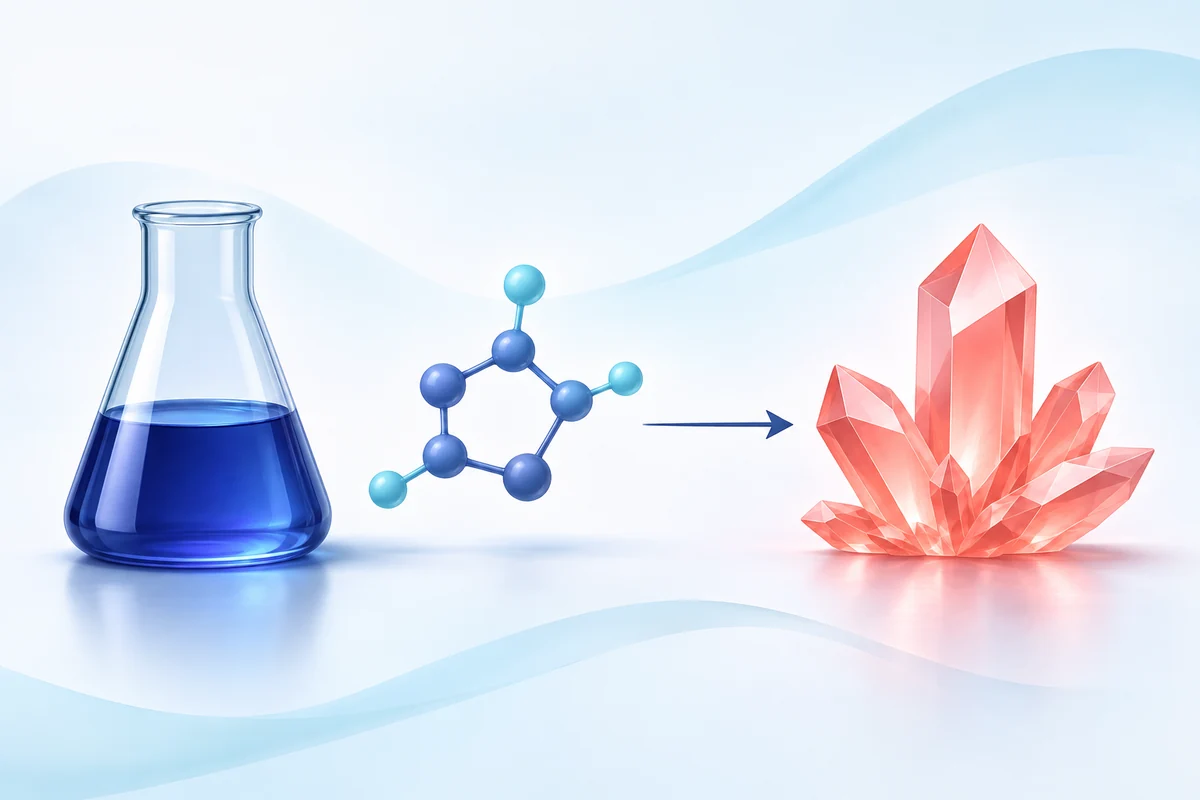
Table-of-contents graphic concept for communicating one chemical transformation.
Original editorial scientific illustration for the ARXVI Figure Studio website. Wide landscape composition, 3:2, center the essential artwork with clear margins, crisp forms readable at small size. Clean white and very pale cool background, art-directed palette of indigo, cyan and restrained coral or teal accents. Editorial quality and calm high-end studio lighting. Concept illustration, no simulated microscopy or experimental result, no text, no numbers, no logos, no watermark, no website screenshot. A chemistry table-of-contents graphic concept with an indigo flask, a restrained simple molecular motif, thin reaction arrow and stylized coral product crystal. Designed for communicating a single transformation at small size; avoid invented explicit bond structures or labels.
Choose one transformation, material or property as the focal point. Give it enough space to read at the journal's display size and check the instructions for your specific journal.
Use a dedicated chemical drawing tool for structures and stereochemistry. Assemble the verified structures around clear arrows and place reaction conditions where the reader expects them.
Arrange the reported intermediates in reaction order. Use distinct labels for the catalyst, substrate and product, and annotate steps identified as proposed.
Reserve space for the verified substrate structure and identify the feature that changes.
Place the reaction arrow and the supplied conditions together.
Place the verified product structure beside the property or result emphasized in the abstract.